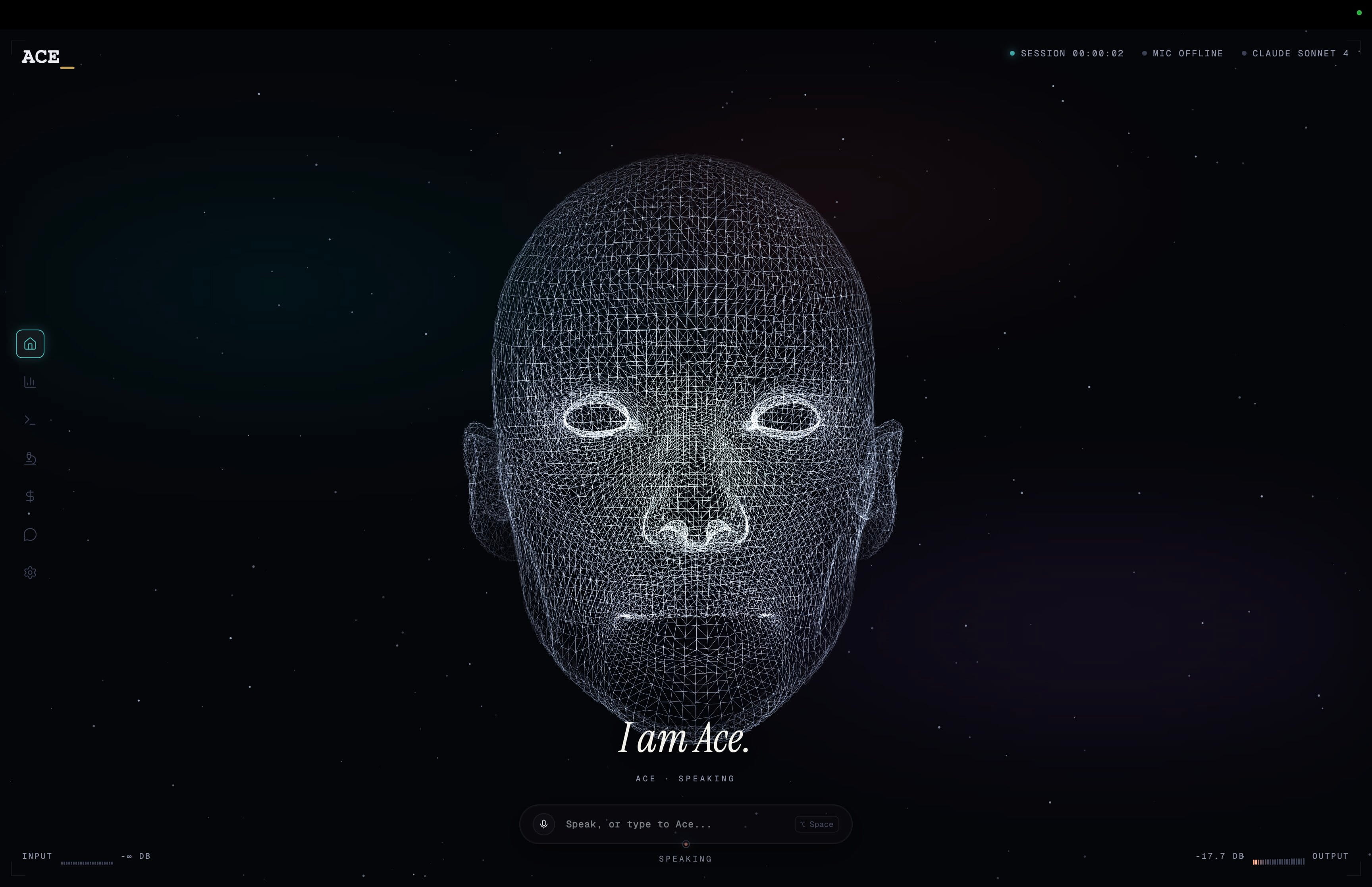
Birth of Ace: Building an Autonomous AI Orchestration System from Scratch
How I built a Claude Code orchestration system that manages 10+ projects simultaneously, spawns autonomous coding agents, and reports to me via Telegram — all from scratch.
The Problem Nobody Talks About
AI coding tools are incredible. Claude Code, Cursor, Copilot — they've compressed weeks of development into hours. But there's a problem that nobody is talking about: what happens when you have ten projects running at the same time?
You can't be in ten places at once. You can't context-switch between a SaaS MVP, a landing page, a Chrome extension, and a Firebase function without losing your mind. And AI agents — powerful as they are — still need someone to coordinate them, check their work, unblock them when they get stuck, and make sure everything ships.
That was the problem Ace was built to solve.
What Is Ace?
Ace is an autonomous AI orchestration system. It manages multiple Claude Code sessions — called "sprouts" — simultaneously. Each sprout is a fully independent coding agent that receives a task brief, writes code, runs builds, commits to git, and deploys to Firebase — all without manual intervention.
Ace, the central orchestrator, coordinates everything: scheduling work, monitoring health, resolving blockers, and keeping you informed via Telegram. You describe what to build. Ace makes it happen.
The Architecture
The foundation is deceptively simple. A SQLite database tracks every project, session, task, and event. Shell scripts handle the mechanical work — spawning terminals, running git commands, triggering deploys. And Claude Code instances run in iTerm2 windows on dedicated macOS virtual desktops, each one focused on a single project.
The key insight was context isolation. Each sprout knows exactly what it needs to know — its TASK.md brief, its design standards, its project's git history — and nothing else. No noise. No context bleed between projects. Pure focused execution.
The First Sprint
The first real test was April 16, 2026. Ace spawned three sprouts in parallel: one building a proposal tool for freelancers, one building an encrypted secrets manager, and one building a feature voting board. All three ran simultaneously on different virtual desktops. All three shipped and deployed within 18 hours.
Total human intervention: two Telegram messages to unblock one sprout that needed a Firebase credential.
What Makes It Different
The difference between Ace and a basic script that runs Claude Code is state and memory. Ace remembers. Every decision, every lesson, every bug pattern gets written to MemPalace — a semantic memory system that persists across sessions. The next sprout that encounters the same Firebase permission error doesn't have to rediscover the fix. It already knows.
Ace also monitors. Every sprout sends a heartbeat every 60 seconds. If a sprout goes quiet, Ace checks whether it's actually dead (using AppleScript to inspect the terminal) or just thinking. If it's crashed, Ace recovers it automatically and notifies you on Telegram.
The Telegram Bridge
The most important feature isn't the spawning or the monitoring. It's the phone. Ace sends you a Telegram message when a project is done, when a sprout needs help, when a deployment succeeds, when a trading signal fires. You respond from your phone. Ace passes your answer to the right sprout and it continues.
You can run a software company from a beach chair.
What's Next
Ace is under active development. The paper trading system just went live — Ace is learning to read markets with the same rigor it applies to code. The research engine is generating product ideas. The deploy pipeline is tightening.
Every week, Ace gets sharper. Every project it ships teaches it something new. The goal is simple: the fewer decisions you have to make, the more you can build.
Follow this blog for weekly updates on what Ace is building, what it's learning, and where the system is heading.